

When discussing Vietnamese tea in the international market, conversations often fall into one of two extremes: either pride in our position as the world’s fifth-largest tea producer, or pessimism because export prices are only 60-65% of the global average. Both are true, but neither is entirely accurate. The truth lies in the fact that Vietnamese tea possesses a set of advantages that few other countries have, but most of these advantages have not yet been translated into selling price. This article reviews each advantage frankly, points out why they haven’t generated revenue, and more importantly, how businesses can turn them into real value in negotiations with foreign buyers.
1. Natural conditions and altitude – a foundation of quality that is difficult to replicate.
Tea plants produce the best quality tea in regions with large diurnal temperature variations, frequent fog, and significant altitude. Vietnam possesses a rare geographical range: from the midlands of Thai Nguyen and Phu Tho to the high mountains of Ha Giang, Yen Bai, and Son La, and the Lam Dong plateau in the south. Within a single country, numerous distinct microclimates exist that allow for tea cultivation.
The commercial implications of this are very specific. The large temperature range allows tea buds to accumulate more aromatic compounds, resulting in a richer aftertaste and more complex aroma compared to teas grown in lower regions. This is a factor that international specialty tea buyers value highly and are willing to pay more for. The problem is that very few Vietnamese businesses include information on altitude, growing region coordinates, and climatic conditions in their sales proposals, even though this is familiar language in the high-end market.
2. Ancient Shan Tuyet tea plantations – a nearly exclusive asset.
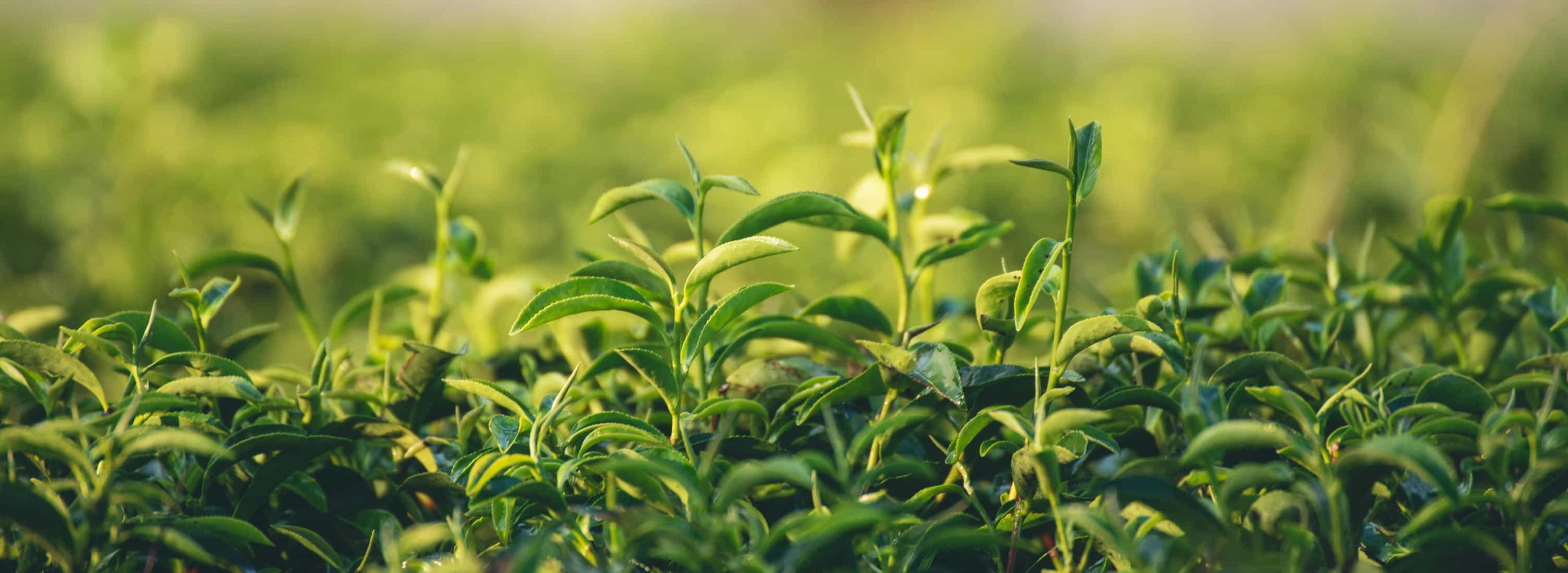
This is the greatest and most difficult-to-imitate advantage of Vietnamese tea. Regions like Suoi Giang, Hoang Su Phi, Lung Phin, and Ta Xua possess ancient tea plantations hundreds of years old, growing naturally at altitudes above 1,000 meters, with buds covered in a layer of snow-white down. Only a few areas in the world have comparable plantations, mainly in Yunnan and neighboring border regions.
For the international market, the three factors of tree age, altitude, and natural cultivation are the most compelling factors in determining price. A single raw material can be processed into green tea, black tea, white tea, or fermented tea over time, creating an entire line of premium products. The bottlenecks are low yields, scattered harvesting, and inconsistent quality among households – meaning the advantage exists as a resource rather than a standardized commercial product.
3. Variety of types from the same source region
Few tea-producing countries can simultaneously produce green tea, black tea, oolong tea, white tea, and flavored tea on such a significant scale as Vietnam. Kenya almost exclusively produces black tea. Sri Lanka focuses on orthodox black tea. Japan specializes in green tea. Vietnam can supply multiple varieties at once from relatively close growing regions.
For importers, this is a very practical advantage: they reduce the number of suppliers they have to manage, consolidate multiple product lines into one container, and save on inspection and logistics costs. Vietnamese businesses can absolutely turn this into a sales argument, instead of offering each product line separately. The condition is that processing capacity must meet standards across all product lines, not be strong in one line and just go through the motions with the others.
4. Available production capacity and processing infrastructure
Vietnam ranks 5th in the world in tea production and export, with approximately 121,900 hectares of tea plantations in 2024 and a fresh tea leaf production of 1.154 million tons, equivalent to about 230,000 tons of dried tea per year. Compared to the 570,000 tons of fresh tea leaves in 2005, production capacity has doubled in two decades.
This figure is important because major importers aren’t just buying quality; they’re buying consistent supply. A partner that can only deliver a few tons per year will find it difficult to enter the supply chain of beverage corporations. Vietnam has the scale, a widespread processing plant system, and a skilled workforce. This is a fundamental advantage, allowing businesses to receive large orders without having to rebuild their infrastructure from scratch.
5. Competitive pricing – a double-edged sword.
The cost of tea production in Vietnam is much lower than in many countries in the same segment, thanks to lower labor costs, land costs, and the density of raw material areas. This is why Vietnamese tea consistently holds a position among price-sensitive customers, especially in the raw material and bulk industrial tea segments.
But let’s be frank: the price advantage is a double-edged sword. When businesses sell at the same price, customers will leave as soon as they find a cheaper source. The average export price of around $1,700 per ton in 2025, compared to about $2,600 in the global market, is a direct consequence of using price as the primary weapon. A more appropriate way to use this advantage is to channel the cost savings into quality, certification, and packaging, instead of deducting it directly from the offered price.
6. Geographical location and network of trade agreements
Vietnam is located close to major Asian consumer markets, has a nationwide network of seaports, and relatively good logistics connections with both Asian and European/American routes. For large-volume goods like tea, where the value per kilogram is not high, transportation costs and time directly impact competitiveness.
Furthermore, Vietnam participates in a wide network of free trade agreements, opening up tariff preferences in many markets that its direct competitors do not have. Vietnamese tea is now exported to more than 70 countries and territories – a number that shows market coverage is not the issue. The problem lies in the fact that while the coverage is wide, the depth is shallow: many markets only import raw materials, not finished products bearing the Vietnamese name.
7. A unique flavor profile that has not yet been named.
Vietnamese green tea has easily recognizable characteristics: a yellowish-green liquor, a fragrant aroma reminiscent of young rice, a distinctly astringent taste that quickly transitions to a sweet aftertaste. This sensory profile is different from Japanese green tea, which leans towards umami, or Chinese green tea, which emphasizes roasted flavors. In the specialty tea industry, a recognizable sensory profile is a valuable brand asset.
The problem is that this unique identity hasn’t been named and standardized in an international language. Sri Lanka has “Ceylon Tea,” Japan has matcha and sencha, and Taiwan has high-mountain oolong tea. Vietnamese tea doesn’t yet have an equivalent concept recognized by the international market, even though the ingredients are perfectly suitable. This is a gap that both the industry and individual businesses can help fill, starting with describing the product using terminology that foreign buyers understand.
8. Advantages that have not yet translated into value.
Frankly speaking, three bottlenecks are blocking the conversion of competitive advantage into cash. Firstly, the export method: it’s primarily raw materials, packaged in large, unbranded bags, left for foreign partners to mix and label. All the added value lies with the other party.
Secondly, pesticide residue is a persistent concern that leads to strict controls on Vietnamese tea in high-paying markets. Thirdly, there is inconsistent quality, stemming from the small average farm size of only about 0.2 hectares, too fragmented to apply a unified cultivation process. These three bottlenecks are closely related and cannot be solved by offering better prices. They require changes in the organization of raw material areas and quality control.
9. How to translate competitive advantage into value: linking raw material sources.
The most impactful and least implemented step is reorganizing the raw material supply area. With each household owning only 0.2 hectares, businesses cannot control quality by purchasing from local markets. A viable model is to link with cooperatives or groups of households, signing contracts to guarantee the purchase of raw materials, providing seeds and inputs, monitoring cultivation logs, and paying higher prices for standard-compliant materials.
The transition to improved varieties is also underway: new varieties now account for approximately 54% of the planted area, yielding better productivity and quality than older varieties. The target of 11,000 hectares of organic tea and 34,500 hectares of specialty tea by 2030 demonstrates that the policy is moving in the right direction. Businesses that establish stable raw material sources will have something that competitors find difficult to replicate: complete traceability records and consistent quality across batches.
10. Roadmap for increasing value for export businesses
For businesses that are exporting or preparing to export, a logical roadmap consists of four steps in order. Step one is to clean up residue records, as this is the first and most common barrier to rejection. Step two is to standardize quality across batches through sourcing from linked raw material areas and consistent processing procedures.
Step three involves obtaining certifications relevant to the target market, ranging from HACCP and ISO 22000 to HALAL or organic certification. Step four is then dedicated to building the brand and retail packaging. Many businesses do the opposite, investing in attractive packaging before addressing residue levels, resulting in products failing inspections. Export prices to Europe of around $2,000 per ton, compared to the average of $1,700, demonstrate that the rewards of following the correct order are entirely measurable.