

The question “who to sell tea to?” sounds simple, but it’s where many distributors get it wrong from the start. They import a product catalog and then look for buyers, instead of identifying which group they want to serve beforehand. The Vietnamese tea market doesn’t have a single customer profile. Tea connoisseurs, households, gift buyers, bubble tea shop owners, hotels, or those buying tea for health reasons have different expectations, accept different price ranges, require different specifications, and need to be reached through completely different channels. This article describes the profiles of each major customer group in the tea market, along with the points that distributors and retailers need to prepare to serve each group.
1. Why is it necessary to segment customers before selecting products?
The same kilogram of oolong tea can go through three different paths: packaged in 200-gram tins for tea connoisseurs, in half-kilogram bags for households, or in 5-kilogram bags for tea shops. These three paths result in three different prices, three different profit margins, and three completely different documentation requirements.
Therefore, segmenting customers is not a theoretical exercise but a crucial step in determining capital structure. It answers very specific questions: how many specifications should be imported, how long should inventory be maintained, whether invoices and quality declaration documents are needed, and whether to invest in packaging or in cost of goods sold. A distributor that serves both customer groups well usually achieves better results than a distributor that tries to serve all of them.
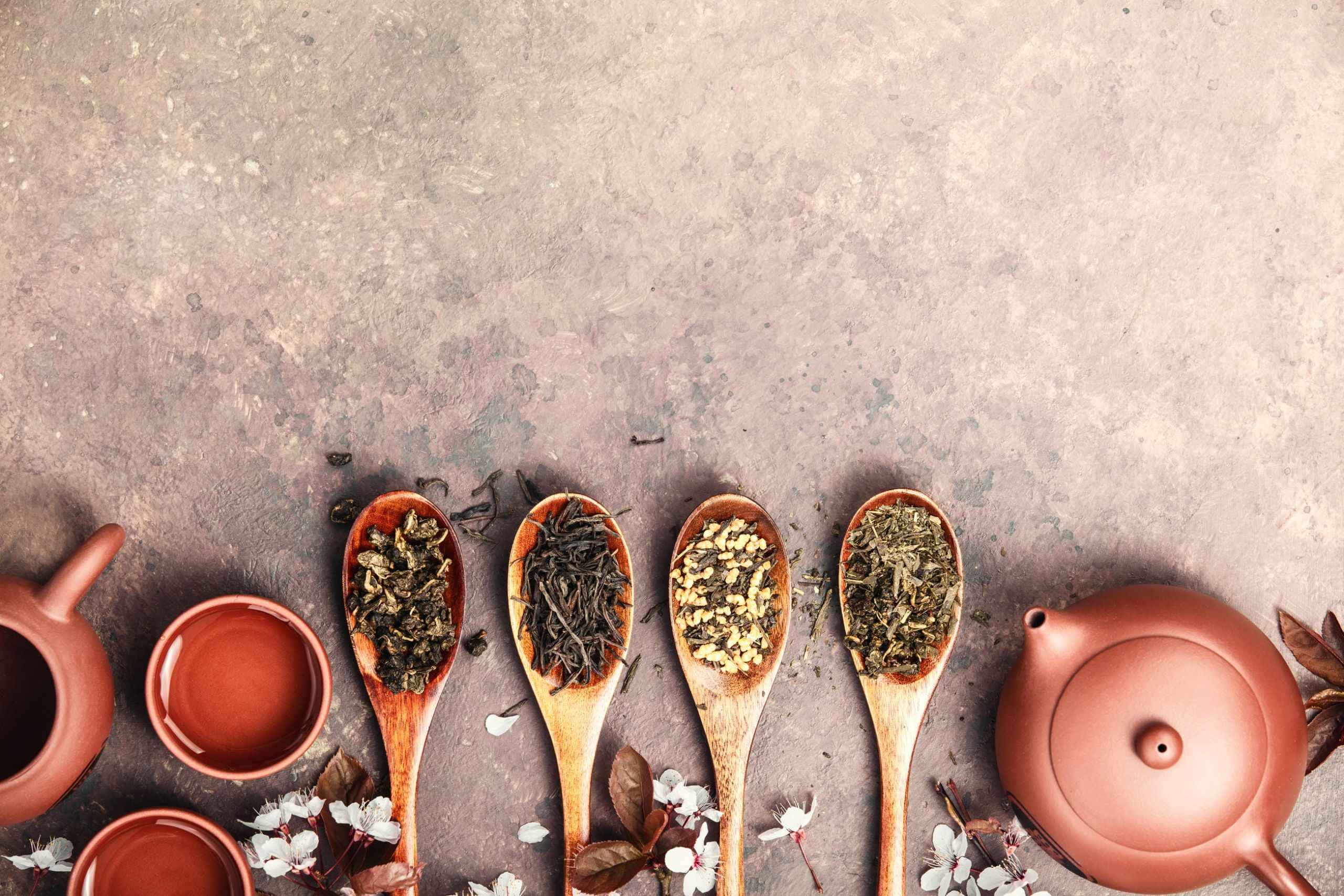
2. Tea connoisseurs – a small group that shapes reputation
This group of discerning customers enjoys drinking tea as a hobby and is capable of making detailed observations about aroma, flavor, aftertaste, and the longevity of the brew. They care about the origin of the tea, the tea variety, the harvest season, the tea maker, and the processing method. Their expectation is for an authentic product, exactly as described, without added flavorings.
This group accepts high prices, typically buying loose leaf tea in small quantities of fifty to two hundred grams to sample various types. Their purchases are consistent but not in large volumes. Their main channels of contact are specialty tea shops, tea enthusiast groups, and tea tasting events. The true value of this group lies not in sales but in reputation: they naturally verify quality and refer new customers to the distributor.
3. Ordinary households – stable income base
Households are the largest group and generate the most consistent income. They buy tea for daily consumption and to entertain guests, prioritizing familiar flavors over exploring new products. Their main expectation is stability: each subsequent batch must be identical to the previous one, prices should not fluctuate suddenly, and the tea should be readily available everywhere.
The appropriate price range is mid-range, with common sizes from two hundred to five hundred grams, and a purchase frequency of about one to two times per month depending on consumption. The distribution channels include grocery stores, traditional markets, supermarkets, food stores, and increasingly, e-commerce platforms. For distributors, this group plays a crucial role in channeling cash flow, helping to maintain capital turnover to support higher-margin but slower-selling product lines.
4. Customers buying personal gifts
This group buys tea not to drink but to give as gifts, so the evaluation criteria shift to form and meaning. The box must be elegant, the brand must sound reputable, and the product must have a story to tell when handed over. The quality of the tea itself is still important, but it’s not the deciding factor when buying.
The price is significantly higher than that of similar teas sold individually, usually in boxes containing one or two types of tea with a paper bag. Purchases are frequent on special occasions: Tet (Vietnamese New Year), holidays, birthdays, visits, and wedding season. Target channels include stores with attractive displays, online channels with polished images, and sales points in tourist areas and airports. Dealers serving this group need to prepare packaging and inventory at least several months in advance of peak season.
5. Corporate clients and partner gifts
Businesses purchase tea for two purposes: internal consumption within the office and as gifts for partners and employees at the end of the year. This group has the largest order value per purchase and is also the most stringent in terms of procedures.
Their expectations include written quotations, VAT invoices, quality declaration documents, the ability to print logos on packaging, and on-time delivery. Typical specifications include gift boxes or large pantry containers, with purchase frequency being quarterly or annually. The channels of approach are direct sales, referrals through relationships, and internal bidding. Dealers wishing to target this group must invest in documentation and service capabilities; a purely retail-style operation is not feasible.
6. HORECA Channel: bubble tea, coffee, and beverage shops
These customers are buying raw materials, not finished products. The shop owner needs large bags of black tea, oolong tea, green tea, and flavored tea to brew according to their own recipe. The number one expectation is consistency between batches, because their customers drink the same beverage and will immediately notice any change in taste.
The unit price is lower than retail prices, but the volume is large, and purchases are made regularly weekly or monthly. The channels of contact are direct sales, beverage industry trade fairs, and referrals between bar owners. Maintaining this group requires stable supply capacity, continuous stock availability, and technical support in beverage preparation. In return, once the recipe is finalized, customers rarely switch suppliers.
7. HORECA Channel: Restaurants, Hotels, and Resorts
Unlike beverage shops, this group uses tea as part of the service experience. Hotels need tea bags for room service, loose leaf tea for the lounge area, and tea sets for afternoon tea. Restaurants need tea that suits diners’ tastes after meals. Additional requirements include packaging that reflects the establishment’s class, sometimes featuring the hotel’s own branding.
This group accepts mid-to-high price points and diverse packaging options, from individual filter bags to large boxes, purchasing on a recurring contract basis. The channels of contact are the purchasing department and the head chef. The key is a complete quality record and the ability to produce private labels, as accommodation establishments often have to meet internal food safety control standards.
8. Health-conscious customer group
This is a rapidly growing group, comprising middle-aged individuals, those with underlying health conditions, and young people pursuing healthy lifestyles. They seek out herbal teas such as chamomile, artichoke, pagoda flower, lotus leaf, ginger, lemongrass, and centella asiatica, or green and white teas for their antioxidant content. Their expectations are for clear benefits, transparent origins, and the absence of synthetic flavorings.
The price range is quite wide, the most common packaging is tea bags or small boxes for convenient daily use, and purchases are frequent as the product is used as a habit. Distribution channels include pharmacies, health food stores, traditional medicine clinics, and e-commerce. Mandatory requirements include complete product declaration documents and cautious communication, avoiding any statements suggesting medicinal cures.
9. International tourists and the souvenir market
Foreign tourists and the Vietnamese diaspora form a small but high-value group. They seek products that reflect Vietnamese identity: lotus tea, ancient Shan Tuyet tea, Lam Dong oolong tea, Thai Nguyen green tea, packaged compactly, easy to carry in luggage, and with information in English.
The core expectation is the story of the growing region and proof of origin. Suitable packaging includes small boxes, vacuum-sealed bags, and multi-pack tasting sets. The distribution channels include shops in the Old Quarter, airports, hotels, and cross-border online sales. This group is noteworthy as a stepping stone to export: they help businesses verify packaging, labeling, and taste before launching products into the more than seventy markets where Vietnamese tea is present.
10. Combine customer groups into a viable strategy.
No agency can serve all nine groups effectively at once. The most efficient approach is to select one group that generates the most revenue, typically households or cafes, and then supplement it with one or two high-margin groups such as corporate gifts or health-conscious customers. The tea connoisseur group should be kept small because its value lies in prestige, not sales volume.
From that selection, one can then deduce the product catalog, packaging specifications, inventory levels, and required documentation. This approach helps businesses avoid stocking too many product lines, selling only a small amount of each, with capital scattered in the warehouse and no customer group being properly served.