

Although harvested from the same tea plant, green tea, black tea, and oolong tea offer three different price points, target three different customer segments, and present three completely different inventory challenges. For dealers or distributors preparing to import their first shipment, simply looking at price lists without understanding the reasons for the discrepancies is the quickest way to end up with unsold inventory. The key lies in a single concept: the degree of oxidation. This article analyzes the differences between the three tea types, from processing methods and sensory characteristics to brewing techniques, pricing, and business applications, helping importers choose the right tea for the right sales channel.
1. Oxidation – the variable that determines the three types of tea.
Green tea, black tea, and oolong tea all come from the same plant, Camellia sinensis. Fresh tea leaves contain enzymes; when the leaf cell structure is broken down, these enzymes come into contact with oxygen and transform the polyphenol compounds. This process is called oxidation, and the degree of oxidation is the variable that produces the three distinct products.
Green tea undergoes early enzyme inactivation using heat, thus retaining almost the freshness of the leaves, with oxidation levels close to zero. Oolong tea is somewhere in between, usually between 15% and 70% depending on the processing style. Black tea is fully oxidized. For importers, understanding this explains three common misconceptions: why green tea is more difficult to preserve, why oolong tea has a higher cost, and why black tea is the most stable for long-distance transport.
2. The green tea production process and what it says about the cost of goods sold.
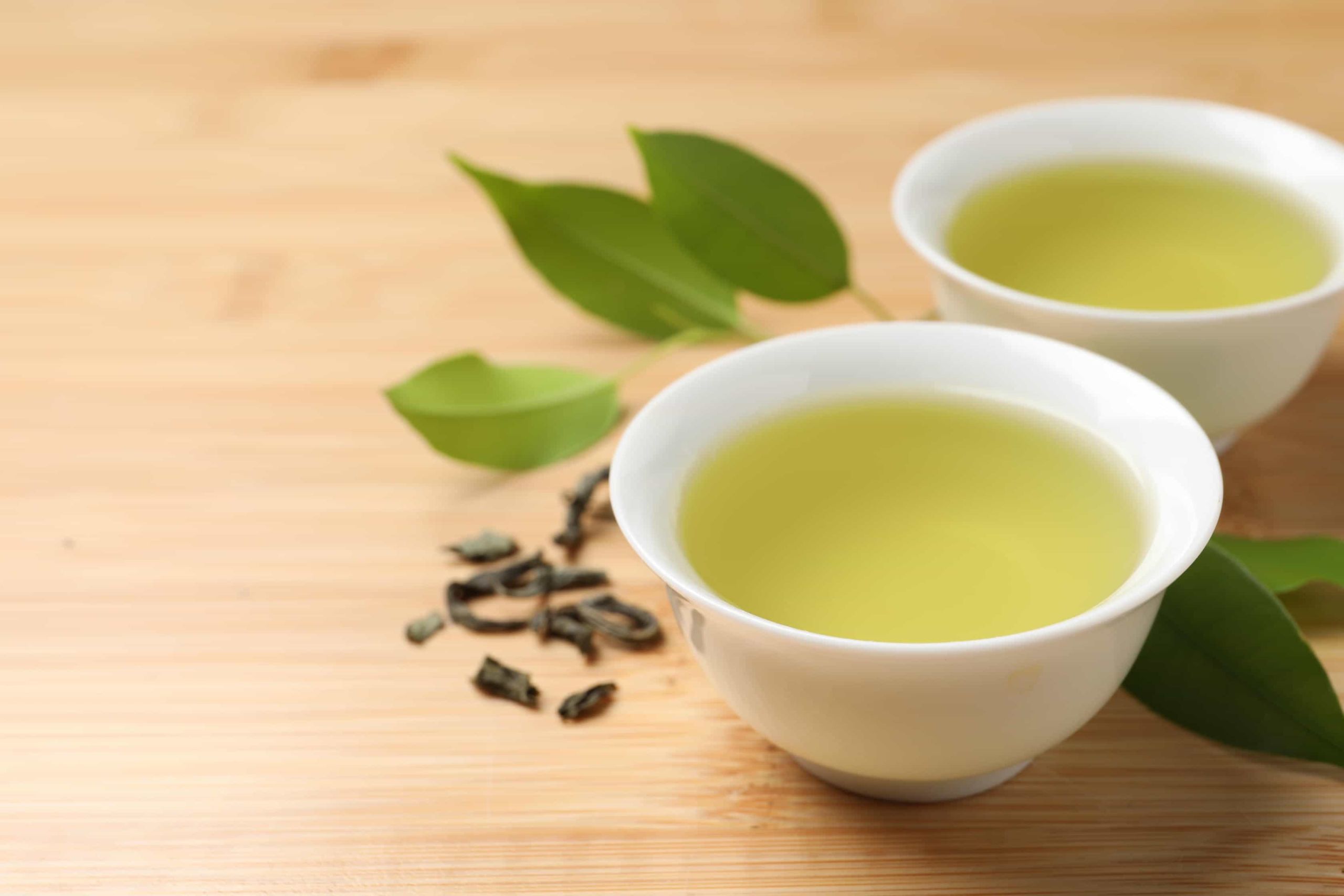
The process of making green tea is quite short: harvesting, light wilting, enzyme inactivation by pan-frying or steaming, shaping, drying, and flavoring. The entire process usually takes only one day, and the crucial step is enzyme inactivation – even a few minutes’ delay causes the leaves to oxidize, the tea to turn red, and lose its characteristic rice-like aroma.
Because the processing time is short, the processing cost per kilogram of green tea is not high. Therefore, the selling price mainly reflects the quality of the raw materials: whether it’s hand-picked (one bud and two leaves) or machine-picked, whether it’s spring or summer harvest, and whether it’s grown in lowlands or highlands. This is why the price range of green tea on the market is the widest. When importing goods, distributors need to request samples for each batch rather than fixing the price based on the region name, because even within the same growing region, there are many quality levels that differ by several times.
3. Black tea processing and advantages in terms of yield
Black tea undergoes four main steps: wilting to reduce moisture, rolling or cutting to break down cells, oxidative fermentation in a temperature- and humidity-controlled room, and finally drying to stop the reaction. The market is divided into two main types: loose leaf black tea produced using traditional methods and finely chopped or crushed black tea – the latter extracts quickly and is very suitable as an ingredient for beverages.
The commercial advantage of black tea lies in its ability to be produced on a large scale with relatively consistent quality. The leaves are fully oxidized, resulting in a stable product with minimal changes during storage and transportation. This is why black tea accounts for a large portion of Vietnam’s tea exports, even though the average price in 2025 was only around US$1,700 per ton.
4. The Oolong tea processing method and why this variety is expensive.
Oolong tea is the most labor-intensive to make. After harvesting, the leaves are gently sun-dried, then moved to a cool wilting room, and then undergo several alternating rotations and rest periods to lightly bruise the edges and cause localized oxidation. Tea makers must monitor the leaves continuously for many hours, sometimes throughout the night, to decide when to stop. After that, enzymes are deactivated, the leaves are rolled and shaped, and for oolong tea balls, there are dozens of additional cycles of wrapping in cloth, rolling, and drying in rotation.
The entire production process takes one to two days, heavily dependent on skill, and involves significant losses. This is the real reason why oolong tea has a much higher cost than regular green tea. For distributors, this cost also acts as a protective barrier: the product is less likely to be copied and less susceptible to price wars compared to regular teas.
5. Sensory differences when tasting three types of tea
Place the three cups of tea side by side, and the differences become very clear. Green tea yields a clear, yellowish-green liquor with aromas of roasted rice or fresh leaves, a distinct astringent taste on the tip of the tongue followed by a sweet aftertaste. Oolong tea yields a golden-yellow to amber liquor depending on the degree of oxidation, with floral or milky aromas, a soft taste, a lingering sweet aftertaste, and almost no harshness. Black tea yields a reddish-brown liquor with aromas of honey or dried fruit, and a strong, full-bodied flavor.
For business people, tea tasting skills are just as important as negotiating prices. The testing should be done using the same standard: three to five grams of tea, one hundred and fifty milliliters of water, at the same temperature and for the same steeping time. By keeping these variables constant, the quality differences between suppliers become immediately apparent, and price comparisons become truly meaningful.
6. Brewing temperature, number of brews, and customer experience.
The three types of tea require three different brewing methods, a detail often overlooked by dealers when advising customers. Green tea needs water at around 75 to 85 degrees Celsius; boiling water will make the tea bitter and yellowish. Oolong tea tolerates higher temperatures, around 90 to 95 degrees Celsius, and can be brewed multiple times – good quality tea pellets can be brewed six to eight times while still retaining their aroma. Black tea, brewed with boiling water, is usually only best brewed two to three times.
The number of times a tea can be brewed directly affects the perceived price. A kilogram of oolong tea is three times more expensive than green tea, but if it can be brewed three times as many times, the cost per serving won’t differ significantly. Dealers who can explain this will find it much easier to sell to the higher-end segment.
7. Mixing application: which line for which channel
In the beverage industry, three types of tea play very different roles. Black tea is the backbone of milk teas and fruit teas thanks to its strong flavor, which remains stable even after being diluted with milk, sugar, and ice. Green tea is used in refreshing drinks like lemon teas, peach teas, and matcha blends, but requires tighter temperature control because it can easily become bitter.
Oolong tea appears at opposite ends of the spectrum. In the tea-drinking segment, it’s sold in small, high-priced boxes, accompanied by stories about the growing region. In the beverage segment, oolong tea is used by chains for premium drinks due to its natural floral aroma. When building a product portfolio, it’s better to start with the target sales channel and then choose the tea type, rather than importing goods first and finding customers later.
8. Price levels and profit margins for each product line.
In terms of profit structure, mainstream green tea is a fast-turnover but thin-margin product due to price transparency and fierce competition. Raw black tea has an even thinner margin when sold in large bags, but this is compensated by large and consistent orders, making it suitable for distributors supplying chain stores and industrial kitchens.
Oolong tea is the opposite: slower turnover, higher order value, and significantly better profit margins. A portfolio consisting only of mainstream tea will always be busy but have thin profit margins; conversely, a portfolio consisting only of premium tea will not have sufficient cash flow to sustain operations. A reasonable balance in many well-run dealerships is for the majority of revenue to come from the mainstream group, while the majority of profit comes from the mid- and high-end groups.
9. Storage, shelf life, and inventory risks
The three types of tea degrade at three different rates, and this determines the quantity that should be imported each time. Green tea is the most sensitive: exposure to moisture, light, high temperatures, or strange odors causes it to lose its aroma very quickly; its best sensory quality is usually only maintained for about six to twelve months. Oolong tea is more durable due to its dense structure and low moisture content. Black tea is the most stable, undergoing little change over time.
Therefore, for green tea, it’s advisable to import in multiple, moderate quantities, prioritizing tea that’s near its harvest season and packaged in vacuum-sealed or moisture-absorbing bags. For black tea, large batches can be imported to get better prices. The biggest risk for new distributors isn’t choosing the wrong type of tea, but importing the right type but in the wrong quantity and at the wrong time.
10. Combine three tea lines in one business portfolio.
The optimal approach is to assign each product line a clear financial mission. Regular green tea and blended black tea are responsible for generating cash flow, ensuring consistent year-round sales, and retaining regular customers. Oolong and specialty green teas handle profit margins and enhance brand image. When expanding, focus on deepening the development of each product line rather than spreading resources too thinly too early.
For export-oriented businesses, these three product lines correspond to three different strategies. Black tea focuses on production volume and requires standardized residue levels to meet the requirements of each market. Green tea and specialty oolong tea focus on value, requiring traceability documentation and a compelling story about the growing region. This is also a way to narrow the gap between the current average export price and the global price level.